Resorbables.comStrategic enquiries ↗
Resorbables.com · Available for strategic acquisitionEnquire ↗

APPLICATION FRONTIER

Cardiovascular scaffolds

Resorption cannot compensate for poor vascular outcomes.

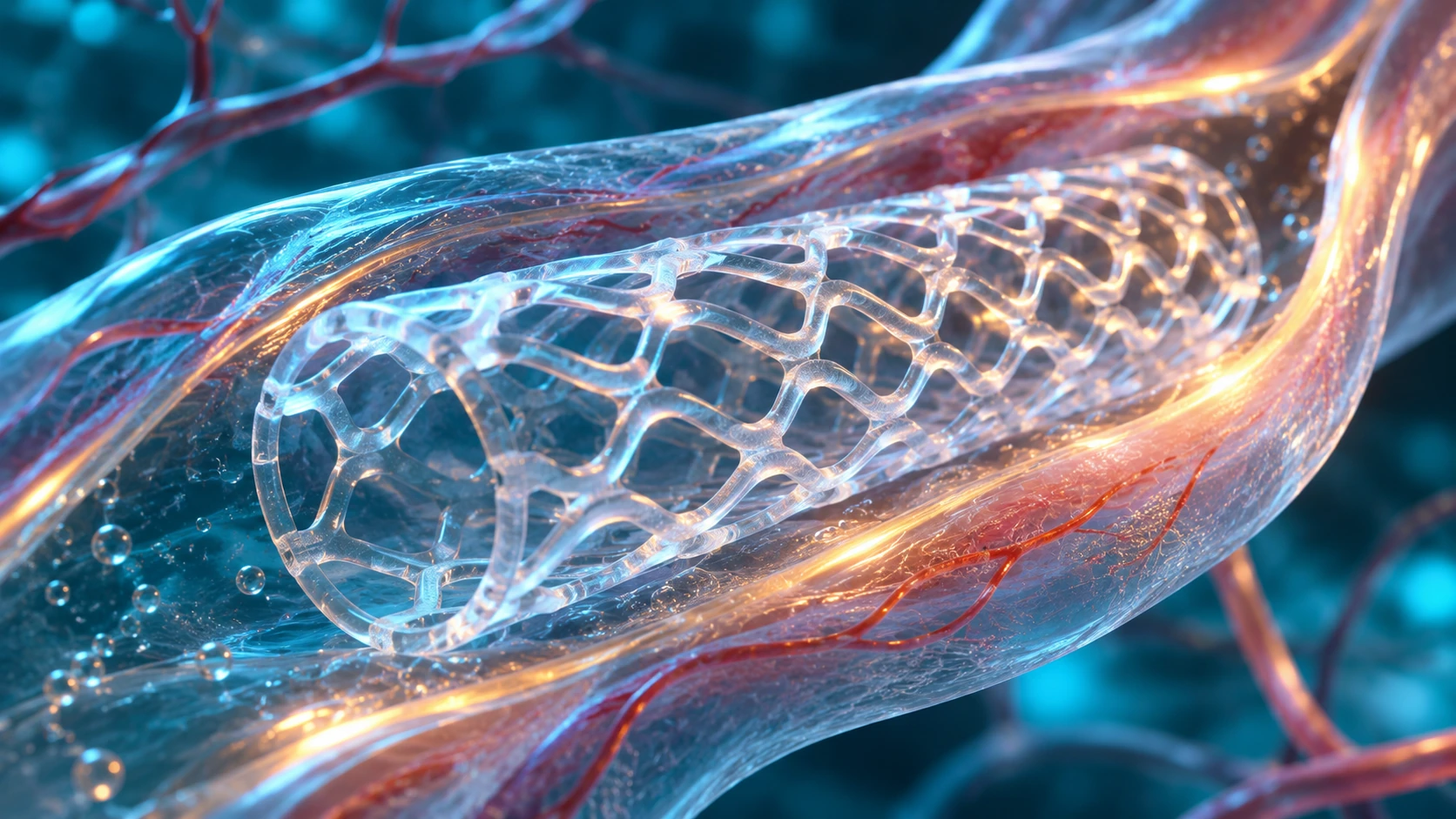
Original editorial visualization of Cardiovascular scaffolds

DIRECT ANSWER

What does this technology do?

Bioresorbable vascular scaffolds were developed to provide temporary support inside a vessel and subsequently degrade. Cardiovascular use is technically demanding because radial strength, strut thickness, healing response and antithrombotic strategies influence patient outcomes.

Current contextHistorically approved example; continued research

Important engineering variables

  • transient radial support
  • thrombosis and restenosis considerations
  • withdrawn ABSORB GT1 regulatory history

WORKING PRINCIPLES

Materials in motion.

Polymer scaffold designs combine a temporary mechanical framework with controlled breakdown. The performance window must be matched to vessel remodeling. Unlike a conventional permanent metal stent, the scaffold changes mechanically and geometrically over time, introducing additional validation needs.

TRANSLATIONAL REALITY

Where evidence matters.

The FDA granted approval to the ABSORB GT1 bioresorbable vascular scaffold in July 2016 and records withdrawal on May 11, 2023. That sequence is a central lesson: an initially approved resorbable technology can face significant post-market and clinical limitations. This page is not a recommendation for any vascular device.

DESIGN CONSTRAINTS

The details decide the outcome.

Engineering consideration

Thrombotic risk, scaffold geometry and vessel size matter.

Engineering consideration

Regulatory approval and continued marketing are distinct milestones.

Engineering consideration

Other emerging scaffold designs require independent clinical evaluation.

DIRECT ANSWERS

Questions worth asking.

Have bioresorbable coronary scaffolds been approved?

Yes. The ABSORB GT1 system received US FDA approval in 2016, but its approval was subsequently withdrawn in 2023.

Are bioresorbable stents automatically safer than metal stents?

No. Safety and efficacy depend on the exact device and supporting clinical evidence.

Why is vascular resorption hard?

A scaffold must support the vessel mechanically without introducing unacceptable thrombosis or healing risks.

REFERENCES

Traceable context.

Selected primary records and peer-reviewed literature relevant to the exact material or application.