Bioresorbable
Capable, in an intended biological context, of degradation followed by biological processing, absorption or clearance of constituent products; usage varies by discipline.
REFERENCE GLOSSARY
A shared vocabulary for the distinct processes of material degradation, biological clearance, temporary support and medical-device translation.
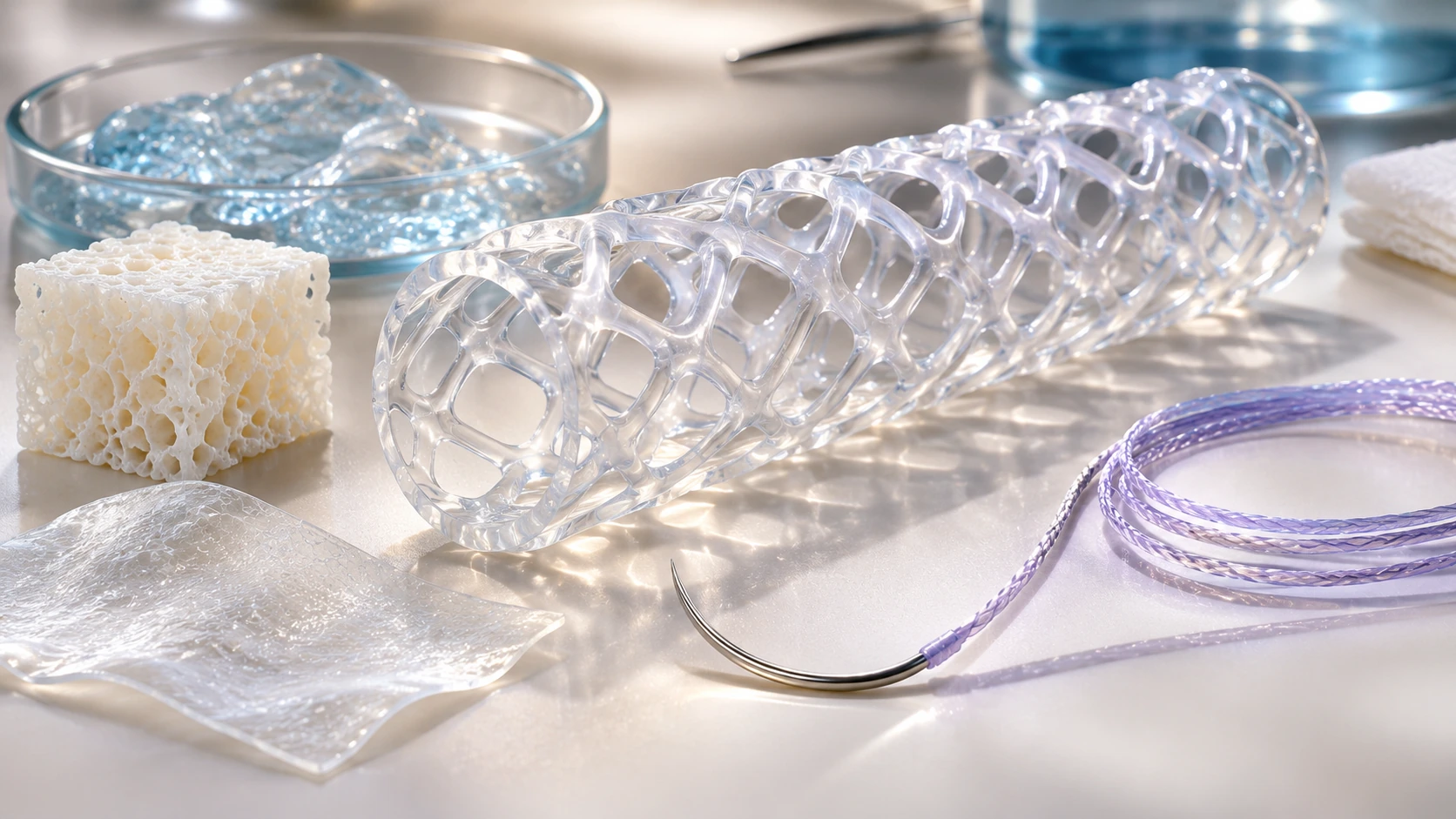
Capable, in an intended biological context, of degradation followed by biological processing, absorption or clearance of constituent products; usage varies by discipline.
Susceptible to breakdown through chemical or biological processes. Breakdown alone does not necessarily demonstrate complete biological resorption.
Often used similarly to bioresorbable in medical-device contexts, but interpretation depends on product labeling and biological fate.
Chemical cleavage by water; important in degradation of many aliphatic polyester medical materials.
Loss of material from a device, which may occur after significant molecular-weight decline.
The period during which a medical device continues to meet the specific performance requirements of its intended use.
Poly(lactic-co-glycolic acid), a lactide-glycolide copolymer family used in various biomedical material architectures.
A matrix or framework designed to temporarily support tissue organization or repair.
Electronic systems intended to perform for a finite time with selected degradable or resorbable components.
These definitions are educational; regulatory terminology must be interpreted in the context of the exact device and jurisdiction.
Explore degradation scienceDIRECT ANSWERS
The terms overlap in medical-device use but their exact interpretation depends on the material, regulatory context and biological fate.