Resorbables.comStrategic enquiries ↗
Resorbables.com · Available for strategic acquisitionEnquire ↗

APPLICATION FRONTIER

Orthopedic & craniofacial fixation

Strength must persist for the healing window.

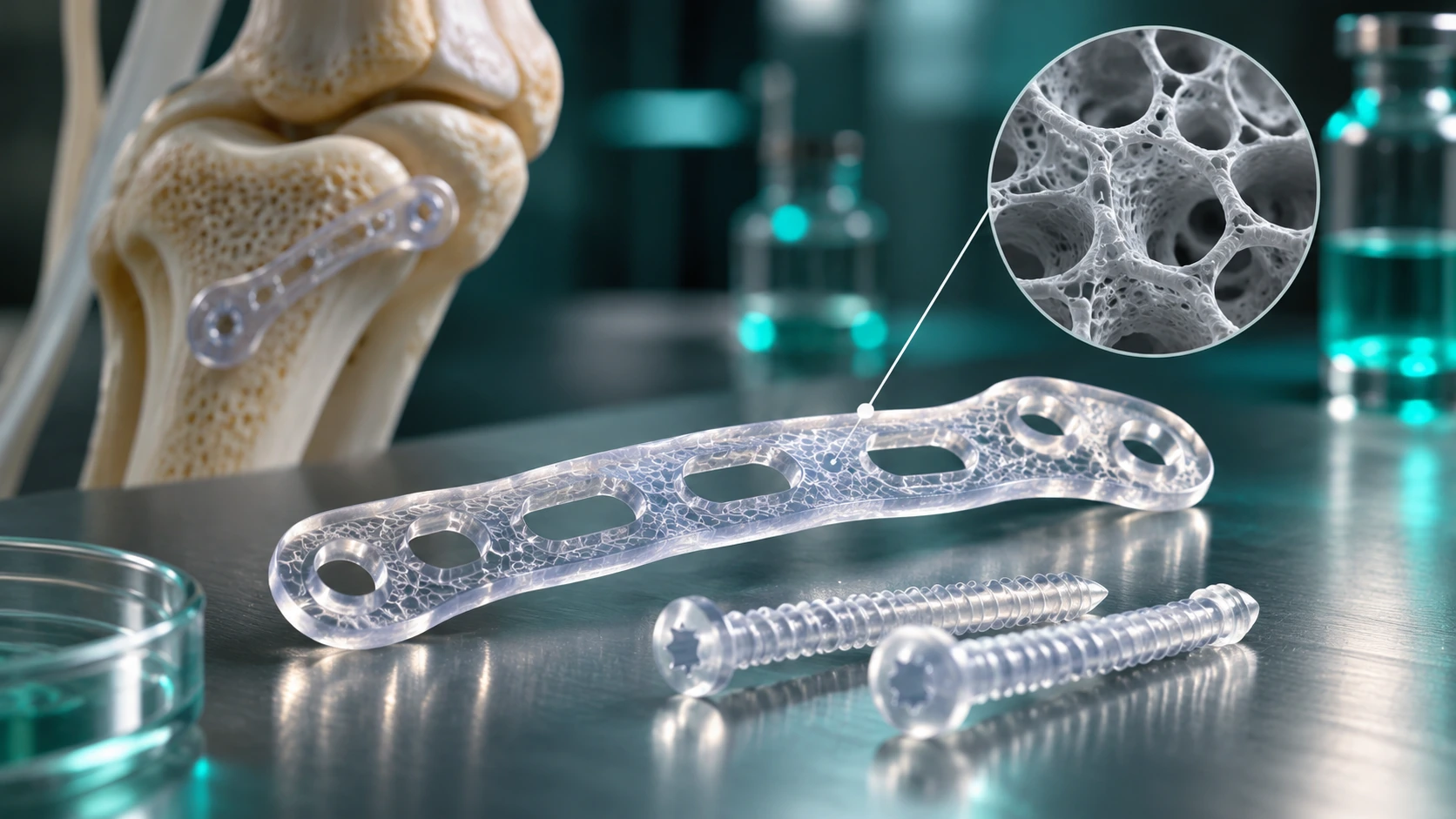
Original editorial visualization of Orthopedic & craniofacial fixation

DIRECT ANSWER

What does this technology do?

Resorbable fixation devices can provide temporary stabilization in selected bone and soft-tissue repair procedures. Commercial and historically cleared systems include polymer screws, meshes, plates and anchors; use is limited by location, mechanical loading and the device's specific indications.

Current contextSelected regulated applications

Important engineering variables

  • lactide-glycolide fixation and craniofacial reconstruction
  • temporary load sharing and interface stability
  • mechanical degradation versus bone healing

WORKING PRINCIPLES

Materials in motion.

Polymer fixation loses molecular weight through hydrolysis before substantial mass loss. In parallel, tissues must develop sufficient structural capacity. Material crystallinity, component geometry, local fluid exposure and mechanical demand determine whether a given design can carry the required load for long enough.

TRANSLATIONAL REALITY

Where evidence matters.

FDA documentation for a resorbable craniofacial fixation system explicitly excludes some full-load-bearing applications and describes relevant contraindications. Bioresorbability does not make a device a substitute for a permanent metal plate in every fracture or anatomy.

DESIGN CONSTRAINTS

The details decide the outcome.

Engineering consideration

Mechanical strength and fatigue under actual use conditions are central.

Engineering consideration

Local tissue response, screw retention and imaging artifacts require evaluation.

Engineering consideration

Craniofacial, orthopedic and sports-medicine uses have distinct load cases.

DIRECT ANSWERS

Questions worth asking.

Are resorbable orthopedic screws clinically real?

Yes, selected resorbable fixation systems have regulatory histories, although suitability is indication-specific.

Can resorbables replace all metal implants?

No. Mechanical demands, clinical evidence and the intended use determine whether temporary fixation is appropriate.

Do these devices degrade at the same rate in every patient?

No. Device design, tissue environment and material properties affect degradation and clinical performance.