Resorbables.comStrategic enquiries ↗
Resorbables.com · Available for strategic acquisitionEnquire ↗

APPLICATION FRONTIER

Tissue-engineering scaffolds

A scaffold is a microenvironment, not a promise of regeneration.

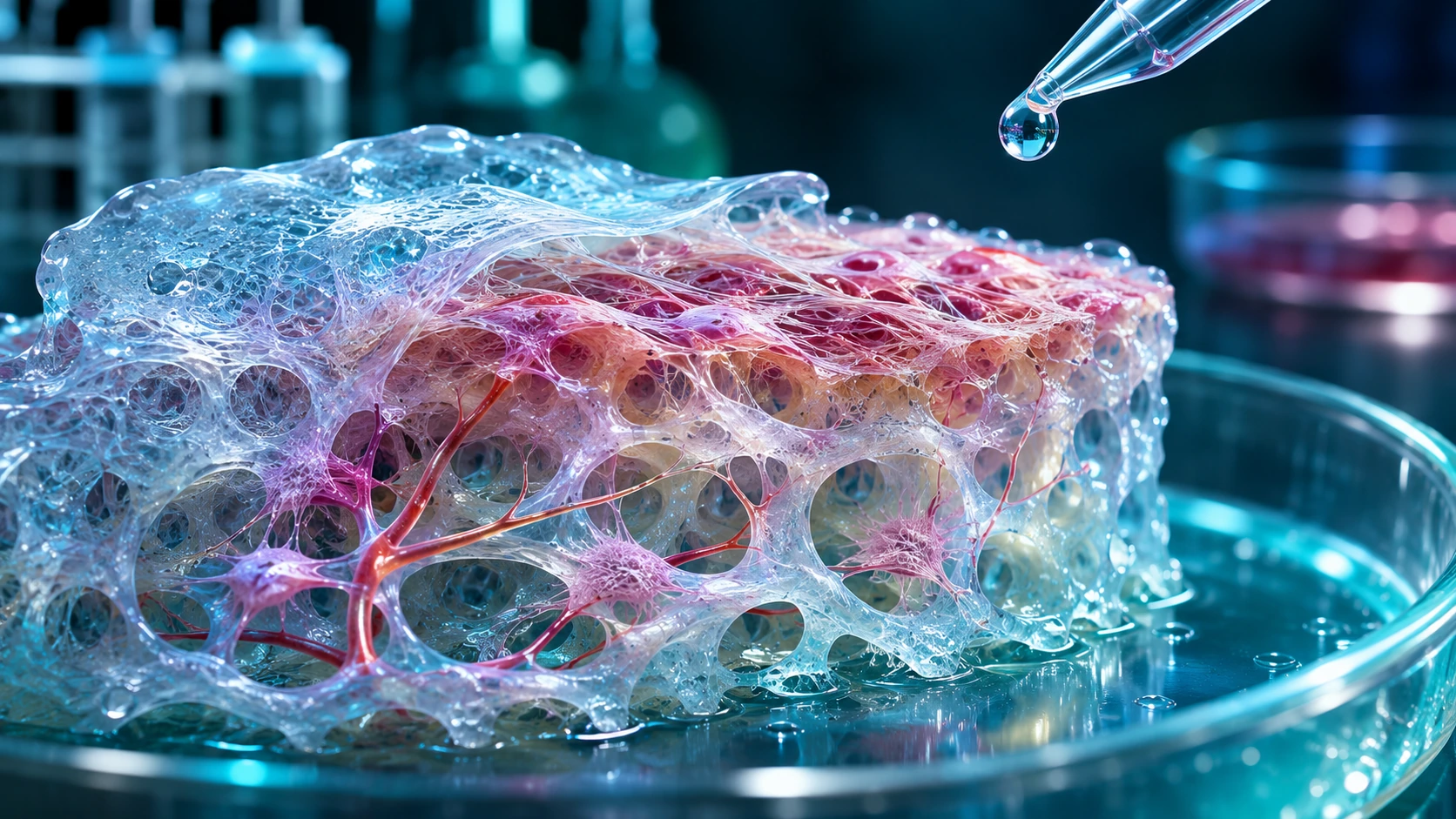
Original editorial visualization of Tissue-engineering scaffolds

DIRECT ANSWER

What does this technology do?

Tissue-engineering scaffolds are three-dimensional matrices designed to provide temporary structural or biological context for tissue development. Researchers investigate resorbable polymers, natural biomaterials and composites in bone, cartilage, soft-tissue and other settings.

Current contextTranslational research and selected clinical uses

Important engineering variables

  • pore size and interconnectivity
  • electrospinning and additive fabrication
  • tissue integration versus material loss

WORKING PRINCIPLES

Materials in motion.

Pores, surface chemistry and mechanical modulus affect how cells and tissues interact with a scaffold. Fabrication approaches include electrospinning, textile methods and additive manufacturing. Ideally, support evolves as native tissue function develops, but the biology may not follow a predictable timeline.

TRANSLATIONAL REALITY

Where evidence matters.

Demonstrating a porous scaffold in a laboratory does not establish that it regenerates human tissues clinically. Biocompatibility, tissue-specific performance, manufacturing reproducibility and well-designed studies remain essential.

DESIGN CONSTRAINTS

The details decide the outcome.

Engineering consideration

Porosity can aid transport but reduce mechanical strength.

Engineering consideration

Crosslinking and molecular weight change biodegradation kinetics.

Engineering consideration

Sterilization and batch consistency can alter a scaffold formulation.

DIRECT ANSWERS

Questions worth asking.

What is a resorbable tissue scaffold?

A temporary porous matrix intended to support tissue organization or repair while its material is gradually degraded and resorbed.

Can any scaffold regenerate organs?

No. Tissue regeneration depends on cell biology, anatomy and convincing evidence, not a scaffold alone.

Why are pore sizes important?

Pore architecture affects transport, surface area, cell interaction and mechanical integrity.

REFERENCES

Traceable context.

Selected primary records and peer-reviewed literature relevant to the exact material or application.