Resorbables.comStrategic enquiries ↗
Resorbables.com · Available for strategic acquisitionEnquire ↗

APPLICATION FRONTIER

Transient bioelectronics

Electronics that function temporarily, then degrade: a research frontier.

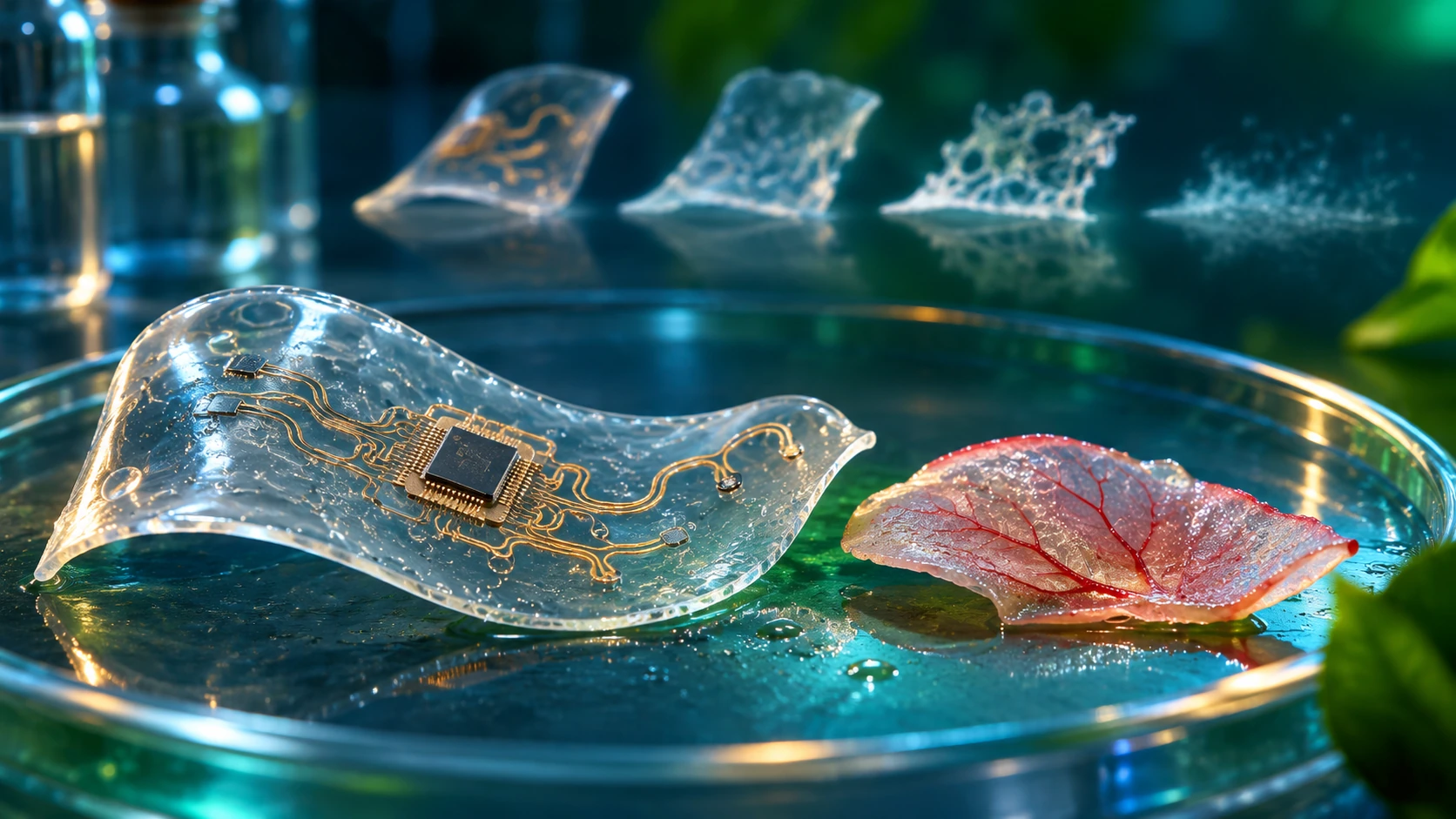
Original editorial visualization of Transient bioelectronics

DIRECT ANSWER

What does this technology do?

Transient bioelectronics combine electronic functionality with a deliberately limited material lifetime. Research explores temporary physiological monitoring, biodegradable power components and stimulation interfaces in which selected components ultimately resorb.

Current contextActive preclinical and translational research

Important engineering variables

  • transient silicon and biodegradable conductors
  • wireless power, telemetry and encapsulation
  • stability during operation versus complete resorption

WORKING PRINCIPLES

Materials in motion.

Designers combine conductors, semiconductors, substrates and packaging chosen for controlled lifetimes in biological environments. A device must remain electrically reliable during its operating window, and degradation products must be evaluated. Power delivery and communication add system-level challenges.

TRANSLATIONAL REALITY

Where evidence matters.

Recent peer-reviewed work demonstrates promising bioresorbable stimulation systems and batteries, including animal and laboratory studies. These papers do not imply broad clinical approval, universal safety or commercial readiness for every experimental architecture.

DESIGN CONSTRAINTS

The details decide the outcome.

Engineering consideration

A completely resorbable system differs from one with nonresorbable components.

Engineering consideration

Electrical lifetime, moisture ingress and tissue response must be assessed together.

Engineering consideration

Animal studies and bench results cannot be equated with human efficacy.

DIRECT ANSWERS

Questions worth asking.

What are transient bioelectronics?

Electronic devices engineered to operate for a limited period, with some or all components designed to degrade or be resorbed.

Are bioresorbable electronic implants widely approved?

Most advanced architectures described in current scientific publications remain research or translational systems.

Can a battery be bioresorbable?

Researchers have reported bioresorbable battery architectures, but deployment and safety must be evaluated for each design.